
The Quest
In my quest for meaning I have decided to start a series of book reviews. Rather than delving into the intricate detail and spurious argument I thought that I would offer my first impressions. I am interested in different perspectives related to meaning. Certainly spirituality gives many people a sense of meaning.
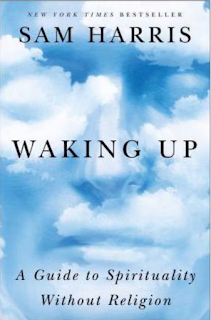 Sam Harris
My first introduction to Sam Harris was through my interest in the writings of Jordan Petersen. I watched many of his interviews and debates on the Intellectual Dark Web, some of the debates were with Sam Harris. In one interview Jordan Petersen was asked who was it that he considered was his most formidable opponent. His reply was that he did not consider Sam Harris as an opponent but his arguments were quite well articulated and well thought through. Sam Harris is a neurological scientist and philosopher, one of the "Four Horsemen of the New Atheism". His book, "Waking up: Searching for spirituality without religion." seem to me a good place to start the quest for meaning. The big question that I had was, can an atheistic scientist experience spirituality without religion.
Spirituality and Meaning
The main problem that I had in following his arguments was that he never adequately defined what spirituality actually was. Instead he took the reader on an experiential journey of eastern religion and chemically induced esoteric and pshycedelic encounters. He came to the conclusion that through meditation and mindfulness one could experience true spirituality, that is, if you divorced it from the religion on which it was founded. To some extent, he suggested one should empty themselves of conscious thought and enjoy the moment. He did, however, give many examples of devotees that have been abused by their spiritual leaders and Gurus. The tendency in eastern religions is to empty oneself of worldly thoughts and concerns. The problem (at least with the examples that he used) is that powerful personalities can use persuasion to invade that which has been emptied. In a similar way when one gives control of self over to psychedelic drugs one is open to fantastic experiences as well as experiences that are not very good at all, which can lead to profound negative consequences.
Experience and the Self
When discussing esoteric experience it always relates back to the self. However, Sam believes that the self may be just an illusion. This is quite understandable since he does not acknowledge a God. In contrast a Christian understanding of self is one that views the personage as made in the image of God with the Kingdom of God residing within. Christian meditation seeks to meditate on God, who is the ground of all being. In a sense it requires a spiritual filling rather than the emptying. However, this notion of God would seem to be fanciful to Sam because the God of his imagination, that which he does not believe in, is a harsh judging God.
What, then are we left with?
According to Harris, "Spirituality begins with a reverence for the ordinary that can lead us to insight and experiences that are anything but ordinary." However, if the self is illusionary and subjective experiences can be exciting or incredibly bad then we can only expect that we can be manipulated or, even worse, we can become the manipulators.
Harris, S. (2014). Waking up: Searching for spirituality without religion. London: Penguin.
Some other reviews from different perspectives may be of interest:
Blog site: Philosophy and other Dangerous Situations.
See also: The Guardian: Sam Harris, the new atheist with a spiritual side.
In my quest for meaning I have decided to start a series of book reviews. Rather than delving into the intricate detail and spurious argument I thought that I would offer my first impressions. I am interested in different perspectives related to meaning. Certainly spirituality gives many people a sense of meaning.
 Sam Harris
My first introduction to Sam Harris was through my interest in the writings of Jordan Petersen. I watched many of his interviews and debates on the Intellectual Dark Web, some of the debates were with Sam Harris. In one interview Jordan Petersen was asked who was it that he considered was his most formidable opponent. His reply was that he did not consider Sam Harris as an opponent but his arguments were quite well articulated and well thought through. Sam Harris is a neurological scientist and philosopher, one of the "Four Horsemen of the New Atheism". His book, "Waking up: Searching for spirituality without religion." seem to me a good place to start the quest for meaning. The big question that I had was, can an atheistic scientist experience spirituality without religion.
Spirituality and Meaning
The main problem that I had in following his arguments was that he never adequately defined what spirituality actually was. Instead he took the reader on an experiential journey of eastern religion and chemically induced esoteric and pshycedelic encounters. He came to the conclusion that through meditation and mindfulness one could experience true spirituality, that is, if you divorced it from the religion on which it was founded. To some extent, he suggested one should empty themselves of conscious thought and enjoy the moment. He did, however, give many examples of devotees that have been abused by their spiritual leaders and Gurus. The tendency in eastern religions is to empty oneself of worldly thoughts and concerns. The problem (at least with the examples that he used) is that powerful personalities can use persuasion to invade that which has been emptied. In a similar way when one gives control of self over to psychedelic drugs one is open to fantastic experiences as well as experiences that are not very good at all, which can lead to profound negative consequences.
Experience and the Self
When discussing esoteric experience it always relates back to the self. However, Sam believes that the self may be just an illusion. This is quite understandable since he does not acknowledge a God. In contrast a Christian understanding of self is one that views the personage as made in the image of God with the Kingdom of God residing within. Christian meditation seeks to meditate on God, who is the ground of all being. In a sense it requires a spiritual filling rather than the emptying. However, this notion of God would seem to be fanciful to Sam because the God of his imagination, that which he does not believe in, is a harsh judging God.
What, then are we left with?
According to Harris, "Spirituality begins with a reverence for the ordinary that can lead us to insight and experiences that are anything but ordinary." However, if the self is illusionary and subjective experiences can be exciting or incredibly bad then we can only expect that we can be manipulated or, even worse, we can become the manipulators.
Harris, S. (2014). Waking up: Searching for spirituality without religion. London: Penguin.
Some other reviews from different perspectives may be of interest:
Nour, M. M. (2017) Waking up: Searching for spirituality without religion. BJPsych Bull, 41(1): 62–63.
Evans, J. A Review of Sam Harris's Waking up: Searching for spirituality without religion.Blog site: Philosophy and other Dangerous Situations.
See also: The Guardian: Sam Harris, the new atheist with a spiritual side.


